HBU in text means “How About You?” It’s a quick way people ask the other person what they think or how they’re doing in a conversation. If you’ve seen it in a message and felt confused, you’re definitely not alone.
This abbreviation shows up everywhere in everyday chats—TikTok comments, Snapchat messages, Instagram DMs, WhatsApp conversations, and regular texting. People use it because it keeps conversations short, smooth, and natural without typing full sentences.
A lot of users search for HBU meaning when they come across it unexpectedly in a chat. Once you understand it, it becomes one of the simplest and most useful texting shortcuts in online communication.
HBU Meaning in Text
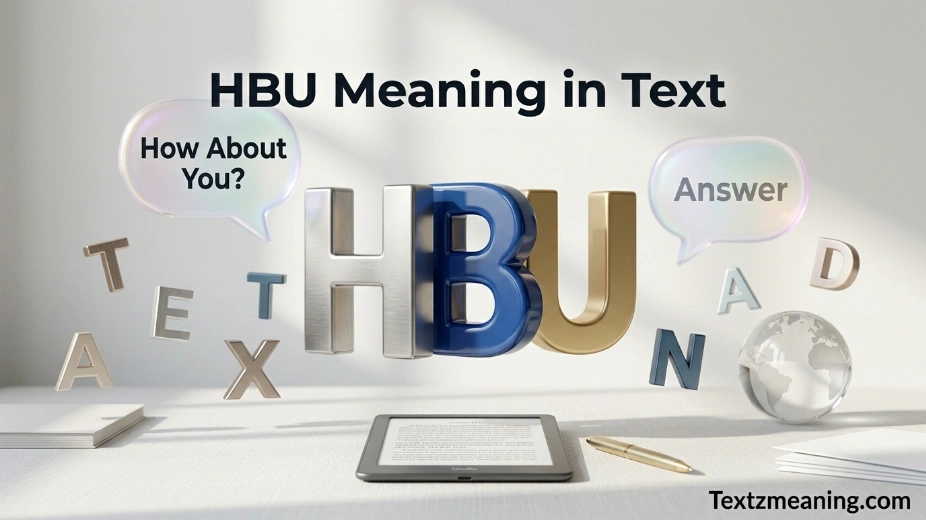
HBU is a common text slang that means “How About You?” It’s a simple question people ask after giving their own opinion, answering a question, or talking about themselves.
Instead of typing the full phrase, people shorten it to HBU because it’s quicker and easier to type. This makes conversations flow faster, especially on mobile phones.
For example:
Friend: I’m staying home tonight. HBU?
This simply means:
Friend: I’m staying home tonight. How about you?
In everyday texting, HBU invites the other person to share their thoughts, plans, opinions, or feelings. Rather than ending the conversation, it encourages the other person to join in.
You’ll often see HBU after questions like:
- How was your day? HBU?
- I love this movie. HBU?
- I’m feeling tired today. HBU?
- I’m going to the beach this weekend. HBU?
Because it’s so short, HBU has become one of the most recognized examples of messaging shorthand used in modern digital communication.
Although it’s informal, almost everyone who regularly sends text messages or uses social media understands what it means.
What Does HBU Stand For?
HBU stands for:
How About You?
Each word has a simple purpose:
- How – asks for information or an opinion.
- About – refers to another person or situation.
- You – directs the question to the person you’re talking with.
Together, the phrase asks someone to share their own answer after you’ve already shared yours.
For example:
Person A: I’m watching Netflix tonight. HBU?
The shortened version keeps the message brief while still sounding friendly.
People prefer using HBU because typing three letters is much faster than writing the entire phrase. In today’s fast-moving online messaging culture, small abbreviations like this save time without changing the meaning.
That’s one reason HBU has remained popular for years across different platforms and age groups.
Quick Answer
What does HBU mean?
HBU means “How About You?”
People commonly use it on TikTok, Snapchat, Instagram, WhatsApp, and text messages to ask someone the same question after sharing their own answer. It’s a quick and friendly way to keep a conversation going.
Key Takeaways
- HBU stands for “How About You?”
- It is a popular texting abbreviation and internet slang.
- People use it on TikTok, Snapchat, Instagram, WhatsApp, Discord, gaming chats, and SMS.
- It is a friendly expression, not an offensive one.
- HBU is especially popular among Gen Z, Millennials, and frequent social media users.
- It helps make conversations shorter and more natural.
- You can safely use it in casual online conversations with friends and family.
Why Do People Use HBU?
There are several reasons why HBU has become a favorite social media abbreviation and chat acronym.
It Saves Time
Typing “How About You?” every time takes longer than typing HBU.
When people send dozens of messages every day, even small shortcuts make conversations quicker.
It Keeps Conversations Going
Instead of talking only about themselves, people use HBU to invite others into the conversation.
For example:
“I’m excited for the concert. HBU?”
This makes the conversation feel more balanced and engaging.
It’s Perfect for Mobile Typing
Most people now chat on smartphones. Short abbreviations reduce typing effort and make texting faster.
That’s why internet slang like HBU fits naturally into today’s online messaging habits.
Younger Users Grew Up With It
Many teenagers and young adults learned abbreviations such as HBU while chatting online, playing games, or using social media.
Today, these shortcuts feel completely natural to them.
It Fits Internet Culture
Modern internet conversations move quickly.
People often use abbreviations instead of complete sentences because everyone already understands them.
Just like IDK, BRB, or TBH, HBU has become part of everyday social media language.
It Sounds Friendly
HBU shows interest in the other person’s thoughts.
Rather than ending the discussion, it politely asks them to respond.
Because of this, HBU is commonly used between:
- Friends
- Family members
- Classmates
- Coworkers (in casual chats)
- Online gaming friends
- Social media followers
Its friendly tone is one of the biggest reasons it remains popular.
Where People Use HBU
HBU appears almost everywhere people communicate online. Whether you’re chatting with friends, commenting on videos, or sending private messages, you’re likely to come across this popular texting abbreviation.
TikTok
TikTok users often include HBU in comments and direct messages.
Someone may leave a comment like:
“I’ve watched this video five times already. HBU?”
Creators also use HBU to encourage viewers to join the conversation by sharing their own opinions or experiences.
Because TikTok focuses on engagement, short phrases like HBU help keep discussions active.
Snapchat
Snapchat conversations are usually quick and informal, making HBU a perfect fit.
Friends often use it while exchanging daily updates.
Example:
Alex: Just got home from school. HBU?
Sam: Still waiting for the bus.
Since Snapchat messages disappear in many chats, people tend to type quickly using abbreviations instead of full sentences.
On Instagram, HBU commonly appears in direct messages, story replies, and comment sections.
For example:
“I love your vacation photos! I’m planning a trip next month. HBU?”
People also use HBU while discussing hobbies, favorite outfits, sports, travel, music, or weekend plans.
The abbreviation helps keep conversations natural without making messages too long.
WhatsApp is one of the most popular messaging apps in the world, and HBU is frequently used in personal chats and group conversations.
Friends may exchange messages like:
“I’m free after dinner. HBU?”
or
“I’ve already finished the assignment. HBU?”
Since WhatsApp is designed for everyday communication, abbreviations like HBU make conversations faster while still sounding friendly.
SMS/Text Messages
Even traditional text messages still include HBU.
Someone might text:
“I’m heading to the gym after work. HBU?”
or
“I had a great weekend. HBU?”
Because SMS often encourages short messages, HBU remains one of the easiest ways to ask someone the same question without typing the full phrase.
No matter which platform you’re using, the meaning stays exactly the same. HBU simply means “How About You?” and invites the other person to continue the conversation by sharing their own answer.
Real Chat Examples
The best way to understand HBU is by seeing how people naturally use it in everyday conversations. Below are more than 25 realistic examples from texting, social media, gaming, and messaging apps.
Example 1 – Friends Texting
A: I’m ordering pizza tonight. HBU?
B: I’m making burgers at home.
A: Nice! Enjoy.
Example 2 – School Friends
A: Did you finish the homework? HBU?
B: Almost done.
A: Good luck!
Example 3 – Weekend Plans
A: I’m going hiking this Saturday. HBU?
B: I’m visiting my grandparents.
A: That sounds fun.
Example 4 – Snapchat Chat
A: Just woke up 😂 HBU?
B: I’ve been awake since 7.
A: Lucky you!
Example 5 – TikTok Comment
User 1: I’ve watched this video ten times. HBU?
User 2: Same here. I can’t stop watching it.
Example 6 – Instagram DM
A: I really like this outfit. HBU?
B: I think it looks great too.
A: Glad you agree.
Example 7 – Gaming Chat
Player 1: I’m using the sniper today. HBU?
Player 2: I’ll stick with the assault rifle.
Player 1: Sounds good.
Example 8 – Morning Conversation
A: Good morning! I’m feeling great today. HBU?
B: Pretty good, thanks!
Example 9 – Favorite Movie
A: My favorite movie is Interstellar. HBU?
B: Mine is Inception.
Example 10 – Music
A: I’ve been listening to pop lately. HBU?
B: Mostly rock music.
Example 11 – Food
A: I had sushi for lunch. HBU?
B: I ordered tacos.
Example 12 – Weather
A: It’s raining here. HBU?
B: Sunny and warm where I live.
Example 13 – Vacation
A: I’m traveling this summer. HBU?
B: Staying home this year.
Example 14 – After School
A: I’m heading to football practice. HBU?
B: I’m going straight home.
Example 15 – Coffee Lovers
A: I drink coffee every morning. HBU?
B: I’m more of a tea person.
Example 16 – Reading
A: I’m reading a mystery novel. HBU?
B: I’m reading a fantasy book.
Example 17 – Exercise
A: I went to the gym today. HBU?
B: I went for a run instead.
Example 18 – Gaming Night
A: Playing Minecraft tonight. HBU?
B: I’m playing Fortnite.
Example 19 – Streaming
A: I’m watching Netflix tonight. HBU?
B: I’ll probably watch YouTube.
Example 20 – Shopping
A: I’m buying new shoes today. HBU?
B: I’m saving my money.
Example 21 – Exam Week
A: I’ve studied for three hours already. HBU?
B: Just started revising.
Example 22 – Birthday Plans
A: I’m having dinner with family tonight. HBU?
B: I’m meeting friends.
Example 23 – Pets
A: I have two cats. HBU?
B: I have one dog.
Example 24 – Daily Routine
A: I usually wake up at 6 AM. HBU?
B: Around 8 AM.
Example 25 – Travel
A: I’ve never been to Japan. HBU?
B: I visited last year.
Example 26 – New Hobby
A: I’m learning photography. HBU?
B: I’m learning guitar.
Example 27 – Sports
A: I support Barcelona. HBU?
B: I’m a Real Madrid fan.
Example 28 – Books
A: I enjoy reading history books. HBU?
B: I mostly read science fiction.
These examples show that HBU fits naturally into almost any casual conversation. It’s simply a quick way to ask someone the same question you’ve just answered.
How to Reply When Someone Says “HBU”
When someone sends “HBU,” they’re inviting you to share your own answer. There’s no single correct reply—the best response depends on the conversation and your relationship with the other person.
Funny Replies
If you’re chatting with close friends, a humorous reply can keep the conversation entertaining.
Examples:
- Surviving… barely. 😅
- Still waiting to become famous.
- Living on coffee and good luck.
- Same old me, just slightly sleepier.
- Trying not to procrastinate today.
Casual Replies
These responses work well in everyday conversations.
Examples:
- Pretty good, thanks.
- I’m doing great.
- Not much, just relaxing.
- I’m at work right now.
- Just watching a movie.
- Same here.
- Nothing exciting today.
Friendly Replies
These replies help keep the conversation warm and engaging.
Examples:
- I’m doing well! Thanks for asking.
- Things are going great. How’s your day been?
- I’m having a busy day, but it’s going well.
- Pretty good! What are you up to now?
- Everything’s fine. Hope you’re doing well too.
Neutral Replies
These are appropriate when you don’t know the other person very well.
Examples:
- I’m doing okay.
- Not bad.
- Everything’s fine.
- Just keeping busy.
- Doing well, thanks.
- Nothing much at the moment.
A good reply doesn’t have to be long. Even a short answer helps continue the conversation naturally.
Is HBU Rude or Offensive?
No. HBU is not considered rude or offensive.
It’s one of the friendliest abbreviations used in online conversations because it shows interest in what another person has to say.
Instead of talking only about yourself, using HBU gives the other person a chance to share their own thoughts or experiences.
Is It Safe to Use Online?
Yes.
HBU is widely accepted across social media platforms, messaging apps, gaming communities, and text messages.
People of all ages recognize it as a normal part of internet slang.
Is It Appropriate at School?
Yes.
Students often use HBU when chatting with classmates or friends outside the classroom.
Example:
“I’m almost finished with the project. HBU?”
However, in formal assignments or academic writing, it’s better to write the full phrase “How about you?” instead of using the abbreviation.
Is It Appropriate at Work?
That depends on the situation.
In casual workplace chats or friendly team messages, HBU is usually acceptable.
For example:
“I’m available after lunch. HBU?”
However, in professional emails, business reports, or conversations with clients, writing the complete phrase sounds more polished and professional.
Choosing the full expression also reduces the chance of confusion for people who aren’t familiar with texting abbreviations.
Who Uses This Term?
HBU is used by millions of people every day.
Although it’s especially common among younger internet users, it’s no longer limited to teenagers.
Gen Z
Gen Z uses HBU regularly while texting friends, commenting on TikTok videos, chatting on Snapchat, and sending Instagram messages.
For many younger users, abbreviations like HBU feel completely natural.
Millennials
Many Millennials also use HBU because they grew up during the rise of instant messaging, online chat rooms, and smartphones.
It’s still a familiar part of their daily texting habits.
Social Media Users
People who spend time on social media often use HBU to make conversations shorter and more engaging.
You’ll frequently see it in comments, replies, direct messages, and group chats.
Gaming Communities
Online gamers use HBU while discussing strategies, asking about favorite games, or simply chatting between matches.
Since gaming conversations move quickly, short abbreviations help players communicate efficiently.
Everyday Texters
Even people who rarely use social media may type HBU in regular SMS conversations with friends and family.
Because the meaning is simple and easy to understand, it has become one of the most common pieces of messaging shorthand used today.
Origin of the Term
Like many internet abbreviations, HBU became popular during the early years of online messaging.
As texting, chat rooms, and instant messaging services grew, people looked for faster ways to communicate.
Instead of typing “How About You?” every time, users shortened it to HBU.
The abbreviation spread through SMS messaging, MSN Messenger, Yahoo Messenger, AOL Instant Messenger, and later through platforms like Facebook, WhatsApp, Snapchat, Instagram, Discord, and TikTok.
There isn’t a single documented person who invented HBU.
Instead, it developed naturally as internet users created shorter ways to communicate online.
Its popularity continues today because the need for fast, simple communication hasn’t changed.
Other Meanings of HBU
In everyday texting and social media, HBU almost always means “How About You?”
However, in some specialized fields or organizations, the letters HBU may stand for something completely different.
For example, certain companies, schools, or technical industries may use HBU as an internal abbreviation with a unique meaning.
These alternative definitions are uncommon and usually appear only in specific professional or organizational contexts.
Common Mistakes People Make About HBU
Although HBU is one of the easiest internet abbreviations to understand, many people who are new to online messaging still misuse it. Learning these common mistakes will help you use the term naturally and avoid confusion.
Thinking HBU Has Multiple Meanings in Everyday Chats
One of the biggest misunderstandings is assuming HBU has several common meanings.
In casual texting, social media, and messaging apps, HBU almost always means “How About You?” Unless you’re reading a document from a company, school, or another specialized organization, you can safely assume this is the intended meaning.
Using HBU in Formal Writing
HBU works well in casual conversations, but it isn’t suitable for professional communication.
For example, avoid writing:
“Thank you for your application. HBU?”
Instead, write:
“How about you?”
Using the complete phrase sounds more professional and appropriate in business emails, reports, academic assignments, and official documents.
Forgetting That HBU Is a Question
Some people use HBU as if it were a statement instead of a question.
Incorrect:
“I’m excited about the concert. HBU is fun.”
Correct:
“I’m excited about the concert. HBU?”
Remember, HBU is used to ask someone for their own opinion, experience, or answer.
Confusing HBU With Similar Abbreviations
Many beginners mix HBU with other popular internet slang.
For example:
- HBU = How About You?
- IDK = I Don’t Know.
- IDC = I Don’t Care.
- TBH = To Be Honest.
- IMO = In My Opinion.
Although they often appear in the same conversations, they have completely different meanings.
Using It With People Who May Not Understand It
Not everyone is familiar with texting abbreviations.
If you’re speaking with someone who rarely uses social media or online messaging, writing the full phrase “How about you?” may be clearer.
Choosing language your audience understands always improves communication.
Related Internet Slang Terms
HBU is part of a much larger collection of internet slang and messaging shorthand that helps people communicate quickly online. Here are some of the most common abbreviations you’ll often see alongside HBU.
| Term | Meaning | Common Use |
|---|---|---|
| IDK | I Don’t Know | Expressing uncertainty or lack of knowledge |
| IDC | I Don’t Care | Showing that something isn’t important to you |
| IMO | In My Opinion | Sharing a personal opinion |
| TBH | To Be Honest | Giving an honest thought or opinion |
| NGL | Not Gonna Lie | Introducing a truthful or personal statement |
| FR | For Real | Showing agreement, seriousness, or surprise |
| SMH | Shaking My Head | Reacting to disappointment or disbelief |
| BRB | Be Right Back | Letting someone know you’ll return shortly |
Unlike many of these abbreviations, HBU doesn’t express an opinion or emotion. Instead, it invites the other person to continue the conversation by sharing their own answer.
For example:
A: I really enjoyed the movie. HBU?
B: I liked it too, especially the ending.
In contrast:
A: IDK what time the game starts.
or
A: TBH, I expected something better.
Each abbreviation serves a different purpose, but together they make online conversations shorter and more natural.
Comparison Table
The table below compares HBU with several other popular texting abbreviations.
| Term | Meaning | Type | Usage | Popularity |
|---|---|---|---|---|
| HBU | How About You? | Question abbreviation | Asking someone to share their answer or opinion | Very High |
| IDK | I Don’t Know | Acronym | Expressing uncertainty | Very High |
| IDC | I Don’t Care | Acronym | Showing a lack of interest | High |
| IMO | In My Opinion | Acronym | Sharing a personal opinion | High |
| BRB | Be Right Back | Acronym | Letting someone know you’ll return soon | Very High |
Although all of these are common examples of text slang, they aren’t interchangeable.
For example:
- Use HBU when asking someone the same question.
- Use IDK when you don’t know the answer.
- Use IDC when something doesn’t matter to you.
- Use IMO before giving your opinion.
- Use BRB when you’re temporarily leaving the conversation.
Knowing the difference helps you communicate more naturally in text messages and online chats.
Real-World Usage Example
Imagine two friends chatting after school.
Emma sends a message saying:
“I’m thinking about watching a new comedy movie tonight. HBU?”
Jake replies:
“I’m going to play basketball with my cousins first. After that, I’ll probably watch a movie too.”
Emma responds:
“Sounds like a great evening!”
This is a perfect example of how HBU works in everyday digital communication. Emma first shares her own plan and then asks Jake about his. Instead of typing the full question “How about you?”, she uses the shorter abbreviation HBU to keep the conversation quick and casual.
You’ll find similar conversations happening every day on WhatsApp, Snapchat, Instagram, TikTok, Discord, and through regular text messages.
Why This Slang Remains Popular
Many internet abbreviations disappear after a few years, but HBU has remained popular because it continues to fit the way people communicate online.
It Makes Conversations Faster
People send dozens—or even hundreds—of messages every day.
Typing three letters instead of three words may seem like a small difference, but over time it makes conversations quicker and more efficient.
Smartphones Encourage Short Messages
Most online conversations now happen on mobile devices.
Since people often type with their thumbs, shorter expressions like HBU save time and effort.
This is one reason messaging shorthand has become such an important part of modern digital communication.
Social Media Favors Quick Interactions
Platforms like TikTok, Instagram, Snapchat, and X encourage fast conversations.
Users often leave brief comments or send short direct messages, making abbreviations feel natural.
HBU fits perfectly into this style of communication because it’s simple, familiar, and easy to understand.
It Keeps Conversations Going
One reason HBU has lasted for so many years is that it encourages interaction.
Rather than ending a conversation after sharing your own thoughts, HBU invites the other person to participate.
That simple question helps create more engaging and meaningful online conversations.
Almost Everyone Understands It
Unlike some internet slang that changes quickly, HBU has remained consistent for years.
Its meaning is straightforward, making it easy for new internet users to learn while still being useful for experienced social media users.
It Works Across Many Platforms
Another reason HBU remains popular is its versatility.
Whether you’re chatting on WhatsApp, commenting on TikTok, sending an Instagram DM, messaging on Snapchat, talking in a gaming chat, or using traditional SMS, the abbreviation carries the same meaning everywhere.
Because it’s short, friendly, and widely recognized, HBU continues to be one of the most useful pieces of social media language in everyday online messaging.
People Also Ask
What does HBU mean in text messages?
HBU means “How About You?” in text messages. People use it to ask the other person the same question they just answered. It is a common texting abbreviation used in casual conversations on WhatsApp, Snapchat, Instagram, and SMS.
What does HBU mean on TikTok?
On TikTok, HBU means “How About You?” Users often use it in comments or replies to ask others for their opinion or experience. It helps keep conversations interactive and engaging in short-form content discussions.
Is HBU slang?
Yes, HBU is considered internet slang and a texting abbreviation. It is part of modern digital communication and is widely used in social media language, online messaging, and casual chat conversations.
Is HBU rude or offensive?
No, HBU is not rude or offensive. It is a friendly and neutral abbreviation used to continue conversations. It simply asks the other person to share their thoughts or situation.
How should you reply to HBU?
You should reply by sharing your own answer. For example, “I’m good, thanks! HBU?” or “Just relaxing at home, HBU?” The goal is to continue the conversation naturally.
What does HBU stand for?
HBU stands for “How About You?” It is a shortened form used in texting and social media to make communication faster and easier.
Why do people use HBU?
People use HBU because it saves time, is easy to type, and keeps conversations flowing. It is especially popular in fast-paced online chats and social media interactions.
Is HBU a Gen Z term?
HBU is widely used by Gen Z, but it is not exclusive to them. Millennials and older internet users also use it because it has been part of online messaging culture for many years.
Can adults use HBU?
Yes, adults can use HBU in casual conversations. It is suitable for friendly chats but should be avoided in formal or professional writing where full sentences are preferred.
When should you avoid using HBU?
You should avoid using HBU in formal emails, academic writing, business communication, or when talking to someone who may not understand internet slang. In those cases, writing “How about you?” is better.
Frequently Asked Questions
Is HBU the same as “How are you?”
No, HBU and “How are you?” are different. HBU means “How about you?” and is used after sharing your own answer, while “How are you?” is used to ask about someone’s condition or feelings.
Is HBU still commonly used today?
Yes, HBU is still widely used in 2026 across social media platforms, texting apps, and online gaming chats. It remains a popular part of internet slang.
Is HBU formal or informal?
HBU is informal. It is mainly used in casual conversations with friends, family, or online communities.
Can HBU be used in professional chats?
It depends on the workplace. In casual team chats it may be acceptable, but in formal communication, writing the full phrase is more appropriate.
What is the best response to HBU?
The best response is simply to answer the question and then return it. For example, “I’m good, HBU?” or “Busy with work, HBU?”
Why do people prefer HBU over full sentences?
People prefer HBU because it is faster to type, easier on mobile keyboards, and fits modern short messaging habits on social media.
Conclusion
HBU is a simple and widely used texting abbreviation that means “How About You?” It is commonly seen across WhatsApp, Snapchat, Instagram, TikTok, gaming chats, and SMS conversations.
It is not offensive and is mainly used in casual communication to keep conversations going naturally. While it is suitable for everyday chatting, it should be avoided in formal or professional writing.
Overall, HBU is a small but important part of modern internet slang and digital communication. It helps people connect faster, respond easily, and keep conversations interactive in today’s fast-paced online world.
Discover More Post
What Does Meaning of Woke in Text? Real Meaning Examples …
What Does JP Mean in Text? Real Meaning Examples …
What Does CS Mean in Text? Real Meaning Examples …
What Does P Mean in Text? The Real Slang Meaning …

Jeorge is a passionate digital content creator and SEO specialist with over 5 years of experience in decoding internet slang, chat abbreviations, and modern texting trends. As the lead author of TextzMeaning.com, he is dedicated to helping readers clearly understand the real meanings behind viral acronyms and social media language. His expertise combines search engine optimization with user-focused writing, ensuring every article is accurate, easy to read, and highly valuable. Jeorge’s mission is simple: make online communication smarter, clearer, and easier for everyone.