“mm” in text usually means a soft, thoughtful response like “hmm,” “okay,” or “I’m thinking.” People use it in chats on TikTok, Snapchat, Instagram, and texting when they don’t have much to say but want to reply.
It’s a small, simple message—but it can mean different things depending on tone.
That’s why many people search for it. They want to know: Is it good, bad, or just neutral?
Let’s break it down in a clear, easy way.
mm Meaning in Text
“mm” is not exactly a formal acronym. It’s more like a sound-based expression (similar to “hmm”).
In everyday texting, it usually means:
- “I’m thinking”
- “I understand”
- “Okay”
- “I’m not sure what to say”
It depends heavily on context and mood.
For example:
- If someone says “mm” after a long message, they might be unsure or uninterested.
- If they say it during a conversation, it could just mean they’re listening.
So, “mm” is a casual texting expression, not a strict abbreviation.
Where People Use mm
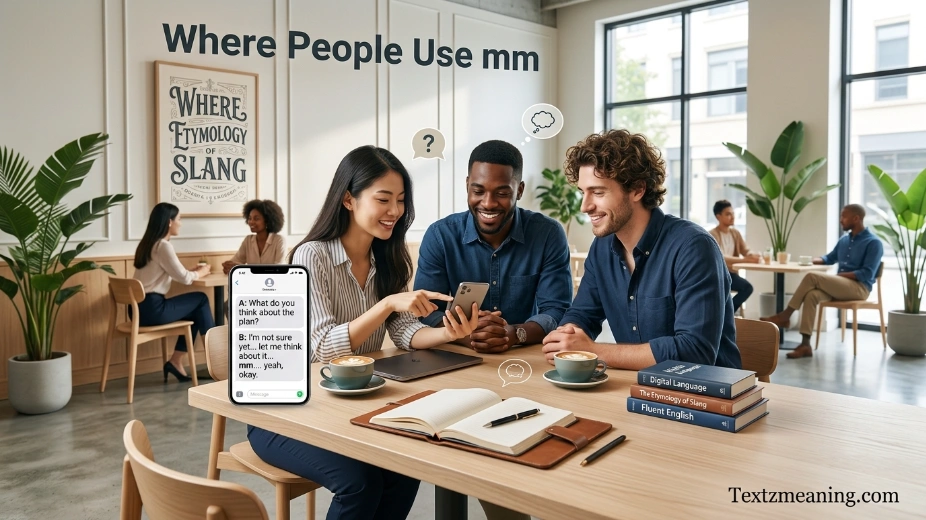
You’ll see “mm” almost everywhere online. Here’s how it shows up on different platforms:
TikTok
People use “mm” in comments or replies when reacting to videos. It can show thinking or a quiet reaction.
Example:
- “mm… that’s kinda true”
Snapchat
On Snapchat, “mm” is often used in chats when someone is unsure or just keeping the conversation going.
Example:
- “mm okay”
In DMs, it can mean mild interest or hesitation.
Example:
- “mm I see”
Here, it’s very common in casual chats. It can mean “yes,” “okay,” or “hmm.”
SMS
In regular texting, “mm” is used as a quick, low-effort reply when someone doesn’t want to type much.
Real Chat Examples
Here are 9 real-style conversations to show how people actually use “mm”:
1
A: I might not come today
B: mm okay
A: I’ll confirm later
2
A: That movie was kinda boring
B: mm yeah
A: right??
3
A: Do you like her?
B: mm maybe
A: lol that means yes
4
A: I finished the assignment
B: mm nice
A: finally done 😭
5
A: Why are you quiet?
B: mm just tired
A: oh okay
6
A: I think he was wrong
B: mm I don’t know
A: fair
7
A: Wanna go out?
B: mm not today
A: alright
8
A: I’m thinking of changing my phone
B: mm good idea
A: thanks
9
A: Are you mad at me?
B: mm no
A: you sure?
How to Reply When Someone Says “mm”
If someone sends “mm,” your reply depends on the situation.
Funny Replies
- “mm? say more 👀”
- “that’s a mysterious mm 😂”
- “mm means yes or no??”
Casual Replies
- “okay”
- “yeah I get it”
- “alright”
Friendly Replies
- “what are you thinking?”
- “you seem unsure 😅”
- “tell me more”
Neutral Replies
- “got it”
- “understood”
- “okay noted”
The key is reading the tone of the conversation.
Is mm Rude or Offensive?
No, “mm” is not rude or offensive by itself.
But it can feel rude depending on how it’s used.
For example:
- If someone gives a long message and gets only “mm,” it may seem dismissive.
- In serious conversations, it might feel like lack of interest.
In casual chats, it’s completely fine.
Safe to Use?
Yes, in friendly conversations.
At School or Work?
Better to avoid it in formal situations. Use full words like “okay” or “I understand.”
Who Uses This Term?
“mm” is mostly used by:
- Teenagers and young adults
- Gen Z users
- Social media users
Common Platforms
- Messaging apps
- Social media DMs
- Comment sections
How Often Is It Used?
Very often. It’s a quick and easy reply, so people use it when they don’t want to type much.
Origin of the Term
“mm” comes from real-life speech.
When people think or agree quietly, they often say “hmm” or “mm.”
Over time, this sound moved into texting.
It became popular because:
- It’s fast to type
- It feels natural
- It copies real conversation
There’s no exact moment it started—it just grew with internet culture.
Comparison Table
| Term | Meaning | Type | Usage | Popularity |
|---|---|---|---|---|
| mm | thinking / okay / unsure | expression | casual chats | medium |
| IDK | I don’t know | acronym | texting, social media | very high |
| IDC | I don’t care | acronym | informal chats | high |
| IMO | in my opinion | acronym | discussions | high |
| BRB | be right back | acronym | quick chats | high |
Real-World Usage Example
Imagine you’re chatting with a friend about plans:
You suggest going out.
They reply: “mm maybe.”
In this case, they’re not fully agreeing or refusing. They’re thinking or unsure.
That small “mm” tells you a lot about their mood without many words.
Different Meanings of mm Based on Tone
“mm” might look simple, but tone changes everything.
If someone types “mm” quickly, it can mean they’re just acknowledging what you said. But if it comes after a long pause, it might show hesitation or even mild disinterest.
For example, compare these:
- “mm okay” → sounds casual and normal
- “mm…” → feels like the person is thinking or unsure
- “mm.” → can feel cold or slightly dismissive
So, the meaning isn’t just the word—it’s how and when it’s used.
mm vs hmm – What’s the Difference?
People often confuse “mm” and “hmm,” but they’re slightly different.
- “mm” → softer, shorter, less expressive
- “hmm” → stronger thinking sound, shows deeper thought
For example:
- “mm yeah” → light agreement
- “hmm… I don’t think so” → clear thinking or doubt
In simple terms, “hmm” shows more emotion, while “mm” is more minimal.
When mm Shows Interest in a Conversation
Sometimes “mm” actually means the person is paying attention.
It works like a small nod in real life.
For example:
A: I had a really long day today
B: mm
A: work was exhausting
Here, “mm” doesn’t mean boredom. It shows the person is listening and letting you continue.
This is common in close friendships or relaxed chats.
When mm Can Feel Dry or Boring
On the other hand, “mm” can feel low-effort.
If someone sends long messages and only gets “mm” back, it might feel like:
- The other person isn’t interested
- They don’t want to talk
- They’re distracted
Example:
A: I worked so hard on this project
B: mm
That reply can feel a bit cold, even if that wasn’t the intention.
So context really matters.
How mm Changes Meaning with Emojis
Adding emojis can completely change how “mm” feels.
Without emoji:
- “mm” → neutral or unclear
With emoji:
- “mm 🙂” → friendly
- “mm 😂” → playful
- “mm 🤔” → thinking
- “mm 😐” → uninterested
Emojis help remove confusion and make your tone clearer.
Why People Prefer Using mm Instead of Full Words
There’s a simple reason: effort.
Typing “mm” is faster than writing:
- “okay”
- “I understand”
- “I’m thinking”
People use it because:
- It saves time
- It feels casual
- It matches real-life conversation
In fast chats, especially on mobile, short replies are very common.
Common Situations Where mm Is Used
You’ll usually see “mm” in everyday chat situations like:
- When someone is unsure about plans
- When they agree quietly
- When they are listening but not adding much
- When they don’t want to end the conversation
Example:
A: Should we go tomorrow?
B: mm maybe
It keeps the conversation open without giving a final answer.
Does mm Mean the Same in Every Country?
Not exactly.
The basic idea stays the same, but how people feel about it can change.
In some cultures:
- It’s seen as normal and polite
In others:
- It may feel too short or uninterested
For example, in fast-paced online cultures, short replies like “mm” are completely normal.
But in more formal communication styles, people prefer full sentences.
How mm Is Different from “Okay”
Both can mean agreement, but they feel different.
- “okay” → clear, direct
- “mm” → softer, less certain
Example:
A: Let’s meet at 5
B: okay → confirmed
B: mm → maybe / unsure
So “mm” leaves a bit of room for doubt.
Signs Someone Is Not Interested
If someone keeps replying with “mm” again and again, it might mean:
- They’re losing interest
- They don’t want to continue the conversation
- They’re busy or distracted
Example:
A: what are you doing
B: mm
A: wanna talk
B: mm
This pattern usually shows low engagement.
But don’t jump to conclusions—sometimes people are just tired.
How to Keep the Conversation Going After mm
If you get a dry “mm,” you can bring the conversation back to life.
Try:
- Asking a question
- Changing the topic
- Adding humor
Example:
A: mm
You: “you sound unsure 😄 what’s on your mind?”
This helps restart the flow naturally.
Mistakes to Avoid When Using mm
Using “mm” too much can create problems.
Here are common mistakes:
- Using it in serious conversations
- Sending it as your only reply repeatedly
- Using it in formal chats
Instead, mix it with proper replies when needed.
Balance is important.
Is mm Used in Voice Messages Too?
Yes, but in a slightly different way.
In voice notes, people say “mm” to:
- Show they’re listening
- Agree quietly
- Fill pauses while thinking
It feels more natural in speech than in text.
That’s why sometimes it can feel confusing when written.
Frequently Asked Questions
What does mm mean in text messages?
It usually means “hmm,” “okay,” or “I’m thinking.” It depends on the context.
What does mm mean on TikTok?
On TikTok, it’s often used in comments to show a thoughtful or neutral reaction.
Is mm slang?
Yes, it’s informal internet slang based on a sound people make in real life.
Is mm rude or offensive?
No, but it can feel dismissive if used in serious conversations.
How should you reply to mm?
You can ask for clarification, reply casually, or continue the conversation depending on the situation.
Conclusion
“mm” is a simple but flexible texting expression.
It usually means someone is thinking, agreeing softly, or unsure.
People use it in casual chats across social media and messaging apps.
It’s fine to use with friends, but in formal situations, clearer words are better.
Understanding small terms like this helps you read messages more accurately—and reply the right way.
Discover More Post
What Does Pick 6 in Football Mean in Text? Real Meaning …
What Does LRC Mean in Text? Slang Guide with Examples …
What Does OTP Mean in Text? Slang Guide with Examples …

Jeorge is a passionate digital content creator and SEO specialist with over 5 years of experience in decoding internet slang, chat abbreviations, and modern texting trends. As the lead author of TextzMeaning.com, he is dedicated to helping readers clearly understand the real meanings behind viral acronyms and social media language. His expertise combines search engine optimization with user-focused writing, ensuring every article is accurate, easy to read, and highly valuable. Jeorge’s mission is simple: make online communication smarter, clearer, and easier for everyone.