TQM in text means “Te Quiero Mucho,” a Spanish phrase that translates to “I love you very much” or “I care about you a lot.” If you’ve seen it in a message and felt confused, you’re not alone.
This little abbreviation shows up a lot in texting and social media conversations on TikTok, Snapchat, Instagram, WhatsApp, and even in casual DMs between friends and family. It’s used as a quick, heartfelt way to express affection without typing the full phrase.
People often search for “TQM meaning in text” when they receive it unexpectedly or see it in comments and captions. Once you know what it means, it becomes a simple and sweet way to understand someone’s feelings online.
TQM Meaning in Text
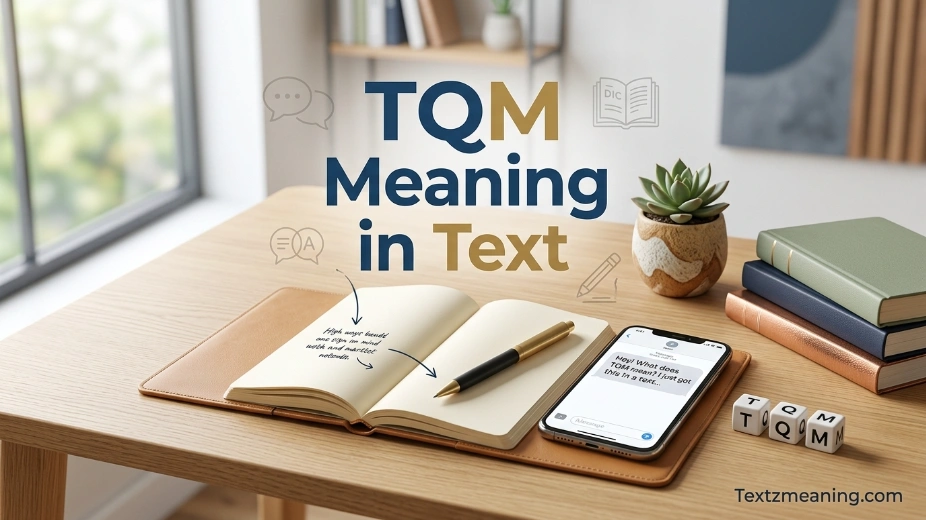
In texting, TQM is a quick way to tell someone you care about them. It comes from the Spanish phrase “Te Quiero Mucho,” which expresses strong affection.
Unlike many English text slang terms, TQM is widely recognized in Spanish-speaking communities and is becoming more familiar to people around the world through social media.
When someone sends you “TQM,” they are usually expressing warmth, kindness, or emotional support. Depending on the relationship, it can mean:
- I love you very much.
- I care about you a lot.
- You’re important to me.
- Sending you lots of love.
For example:
A: Thanks for always being there for me.
B: TQM ❤️
In this conversation, the sender is showing appreciation and affection.
Because texting encourages short messages, abbreviations like TQM have become part of everyday online messaging. They’re faster to type while still expressing meaningful emotions.
What Does TQM Stand For?
TQM stands for:
Te = You
Quiero = Love or care for
Mucho = Very much
Together, “Te Quiero Mucho” translates most naturally into English as:
- I love you very much.
- I care about you a lot.
- I love you so much.
It’s worth noting that in Spanish, “Te quiero” often expresses affection that can be romantic, friendly, or family-related depending on the situation. Because of this, TQM is flexible and can be used with:
- Friends
- Parents
- Siblings
- Grandparents
- Partners
- Close relatives
People shorten the phrase to TQM because it’s quicker to type during fast online conversations and still carries the same emotional meaning.
Quick Answer
What does TQM mean?
TQM means “Te Quiero Mucho,” which translates to “I love you very much” or “I care about you a lot.” People commonly use it on TikTok, Snapchat, Instagram, WhatsApp, and text messages to show affection, appreciation, or emotional closeness in a quick and friendly way.
Key Takeaways
- TQM usually means “Te Quiero Mucho.”
- It is most commonly used in text messages, WhatsApp, TikTok, Snapchat, and Instagram.
- It is an internet abbreviation and texting shorthand, not an English acronym.
- TQM is not rude or offensive when used in normal conversations.
- It is especially popular among Spanish speakers, teenagers, young adults, and social media users.
- People use it to express love, friendship, appreciation, or care in digital communication.
- You’ll often see it in chats, comments, captions, and private messages.
Why Do People Use TQM?
People use TQM because it’s simple, meaningful, and saves time.
Instead of typing three separate words every time they want to express affection, they can send just three letters.
Some of the biggest reasons people use TQM include:
It Saves Time
Texting is designed for speed. Abbreviations help people respond quickly without losing the intended message.
Instead of writing:
“Te Quiero Mucho.”
They simply write:
“TQM.”
It Feels Warm and Personal
Although it’s short, TQM still carries genuine emotion. A simple three-letter message can brighten someone’s day.
It’s Popular With Younger Users
Teenagers and young adults regularly use messaging shorthand in online conversations. TQM fits naturally alongside other internet slang and social media abbreviations.
It Matches Internet Culture
Modern digital communication favors short expressions that are easy to type on mobile devices. Just as English speakers use terms like IDK, TBH, or BRB, Spanish speakers often use TQM to communicate quickly.
It Works in Many Situations
People use TQM when they want to:
- Thank someone.
- Cheer up a friend.
- End a conversation warmly.
- Reply to a compliment.
- Wish someone good night.
- Celebrate birthdays.
- Show support during difficult times.
Its versatility makes it one of the most common expressions of affection in Spanish texting culture.
Where People Use TQM
TikTok
On TikTok, TQM often appears in video captions, comments, and replies. Creators use it to thank their followers, while viewers use it to show support or appreciation.
Example:
Your videos always make me smile. TQM!
You’ll especially notice it on videos created by Spanish-speaking users.
Snapchat
On Snapchat, TQM is commonly sent in private chats between close friends, family members, or couples.
Since Snapchat conversations are usually casual and personal, the abbreviation feels natural and friendly.
Example:
A: Hope your exam went well!
B: It did! TQM 💕
Instagram users often include TQM in:
- Direct messages
- Story replies
- Photo comments
- Birthday posts
- Appreciation captions
Example:
Happy Birthday! TQM! Hope you have an amazing year.
WhatsApp is one of the most common places to see TQM because it’s widely used for daily conversations among family and friends.
People often send it:
- Before going to sleep
- After saying thank you
- During family chats
- On birthdays
- After receiving help
Example:
Mom: Have a great day at school.
Child: Thanks! TQM ❤️
SMS/Text Messages
Although many people now use messaging apps, TQM still appears in traditional text messages.
It’s a quick way to end a conversation with warmth without typing a long sentence.
Example:
A: Drive safely.
B: Will do. TQM!
Real Chat Examples
Example 1
A: Thanks for helping me today.
B: Anytime! TQM ❤️
A: You’re the best.
Example 2
A: Good luck on your exam!
B: Thank you! TQM!
A: You’ll do great.
Example 3
A: Happy Birthday!
B: Thanks so much! TQM!
A: Hope you enjoy your day.
Example 4
A: I finally got the job!
B: Congratulations! TQM!
A: Thank you!
Example 5
A: Are you feeling better now?
B: Much better.
A: TQM. Take care.
Example 6
A: Thanks for listening to me.
B: Always here for you.
A: TQM ❤️
Example 7
A: I miss hanging out with you.
B: Same here.
A: TQM!
Example 8
A: Your advice really helped.
B: I’m glad.
A: TQM!
Example 9
TikTok Comment
User 1: Your content always inspires me.
Creator: Thank you! TQM ❤️
Example 10
Instagram DM
A: Loved your vacation photos.
B: Thank you! TQM!
A: They looked amazing.
Example 11
Snapchat Chat
A: Don’t forget tomorrow’s game.
B: I won’t!
A: TQM. See you then.
Example 12
Family Chat
Mom: Dinner is ready.
Child: Coming now. TQM ❤️
Mom: Love you too.
Example 13
A: Thanks for checking on me.
B: Of course.
A: TQM!
Example 14
WhatsApp Chat
A: Have a safe trip.
B: Thank you! TQM ❤️
A: See you soon.
Example 15
Instagram Comment
User 1: You always make my day.
Creator: Aww, TQM!
User 1: Keep posting!
Example 16
Snapchat
A: I passed my driving test!
B: That’s awesome! TQM!
A: Thanks!
Example 17
A: Thanks for the birthday gift.
B: You’re welcome.
A: TQM ❤️
Example 18
A: You always know how to cheer me up.
B: That’s what friends are for.
A: TQM!
Example 19
TikTok Comment
Viewer: Your videos helped me a lot.
Creator: That means so much. TQM ❤️
Example 20
A: I arrived home safely.
B: Great!
A: TQM for caring.
Example 21
A: Good night!
B: Sleep well.
A: TQM ❤️
Example 22
A: Thanks for always supporting me.
B: Anytime.
A: TQM!
Example 23
A: I couldn’t have done it without you.
B: I’m happy to help.
A: TQM ❤️
How to Reply When Someone Says “TQM”
When someone sends you TQM, they’re usually expressing affection, appreciation, or emotional support. Your reply depends on your relationship with that person and the tone of the conversation.
Funny Replies
- You’re making me smile already! 😄
- Aww, now I owe you a hug!
- Stop being so nice! 😂
- Right back at you!
- You’re awesome too!
Casual Replies
- Thanks!
- Same to you!
- Appreciate it!
- You too!
- Means a lot!
Friendly Replies
- TQM too! ❤️
- You’re the best.
- Thanks for always being there.
- Love you too!
- Sending hugs!
Neutral Replies
- Thank you.
- That’s very kind of you.
- I appreciate it.
- Have a wonderful day.
- Take care!
Is TQM Rude or Offensive?
No. TQM is not considered rude or offensive.
In fact, it’s one of the most positive expressions used in texting. It communicates affection, appreciation, or emotional closeness.
Whether it’s appropriate depends on the relationship between the people involved.
Is it safe to use online?
Yes. TQM is generally safe to use on social media, messaging apps, and text messages.
Is it appropriate at school?
Yes. Friends often use TQM in school chats or group conversations because it’s friendly and respectful.
Is it appropriate at work?
Usually, no. Professional communication should remain formal. While close coworkers who are also friends might understand it, phrases like “Thank you” or “I appreciate your help” are usually more suitable in the workplace.
Who Uses This Term?
TQM is especially common among people who speak Spanish, but thanks to social media, many others now recognize it as well.
Gen Z
Gen Z users frequently use TQM in chats, comments, and direct messages because they prefer quick, expressive communication.
Millennials
Many Millennials also use TQM, particularly when messaging family members or close friends.
Social Media Users
You’ll regularly find TQM on:
- TikTok
- Snapchat
It often appears in comments, captions, story replies, and private messages.
Gaming Communities
Although English abbreviations dominate gaming chats, bilingual players sometimes use TQM when talking with friends.
Texting Culture
TQM has become part of modern messaging shorthand because it’s fast, meaningful, and easy to type.
Origin of the Term
TQM comes directly from the Spanish phrase “Te Quiero Mucho.”
As texting became more popular in the late 1990s and early 2000s, people started shortening common phrases to save time. Just as English speakers began using abbreviations like LOL, BRB, and IDK, Spanish speakers created shorter forms of everyday expressions.
Over time, TQM spread beyond text messages into social media, online gaming, and messaging apps.
While no single person is credited with inventing TQM, it naturally evolved through internet and mobile messaging culture.
Other Meanings of TQM
In online conversations, Te Quiero Mucho is by far the most common meaning of TQM.
However, in other contexts, TQM can stand for different things, such as:
- Total Quality Management (business and manufacturing)
- Company names or organization initials
- Internal project abbreviations
The intended meaning depends entirely on the context.
If you see TQM on TikTok, Snapchat, WhatsApp, Instagram, or in personal text messages, it almost always means Te Quiero Mucho.
Common Mistakes People Make About TQM
Some people misunderstand TQM because they’re unfamiliar with Spanish texting abbreviations.
Here are a few common mistakes:
Thinking It’s English
TQM is not an English acronym. It comes from Spanish.
Assuming It’s Romantic Every Time
Although TQM can be romantic, it’s also commonly used between:
- Friends
- Parents
- Children
- Siblings
- Relatives
Confusing It With Business Terms
Some people recognize TQM as Total Quality Management, but that’s rarely the intended meaning in text messages or social media.
Misreading the Tone
TQM is almost always positive. It isn’t sarcastic or insulting unless someone clearly uses it jokingly.
Related Internet Slang Terms
| Term | Meaning | Common Use |
|---|---|---|
| IDK | I Don’t Know | Answering questions |
| IDC | I Don’t Care | Showing indifference |
| IMO | In My Opinion | Sharing opinions |
| TBH | To Be Honest | Giving honest thoughts |
| NGL | Not Gonna Lie | Introducing truthful statements |
| FR | For Real | Showing agreement or seriousness |
| SMH | Shaking My Head | Expressing disappointment or disbelief |
| BRB | Be Right Back | Leaving a conversation briefly |
Unlike these abbreviations, TQM focuses on expressing affection rather than sharing opinions, reactions, or conversation updates.
Comparison Table
| Term | Meaning | Type | Usage | Popularity |
|---|---|---|---|---|
| TQM | Te Quiero Mucho | Spanish texting abbreviation | Showing affection | Very popular among Spanish speakers |
| IDK | I Don’t Know | Chat acronym | Answering questions | Very high |
| IDC | I Don’t Care | Internet slang | Expressing indifference | High |
| IMO | In My Opinion | Chat acronym | Giving opinions | High |
| BRB | Be Right Back | Messaging shorthand | Leaving temporarily | Very high |
Real-World Usage Example
Imagine your best friend helps you prepare for an important exam. After you receive your results and pass with excellent grades, you send them a message:
“I couldn’t have done it without your help. TQM!”
In this situation, TQM expresses gratitude, appreciation, and genuine affection without needing a long message.
Why This Slang Remains Popular
TQM has remained popular because modern communication values speed and simplicity.
People increasingly communicate through smartphones, where shorter messages are easier to type and read.
Social media has also helped spread texting abbreviations across different countries and languages. As users interact with friends from around the world, expressions like TQM become more widely recognized.
Its positive meaning also contributes to its popularity. Unlike many slang terms that come and go, TQM expresses kindness, appreciation, and emotional connection—feelings that never go out of style.
People Also Ask
What does TQM mean in text messages?
In text messages, TQM usually means “Te Quiero Mucho,” which translates to “I love you very much” or “I care about you a lot.” It’s commonly used to express affection and appreciation.
What does TQM mean on TikTok?
On TikTok, TQM is often used in comments, captions, and replies to thank someone, show support, or express love toward friends, family, or followers.
Is TQM slang?
TQM is better described as a texting abbreviation or internet shorthand rather than traditional slang. It’s a shortened version of a common Spanish phrase.
Is TQM rude or offensive?
No. TQM is considered friendly, respectful, and positive. It’s widely accepted in casual online conversations.
How should you reply to TQM?
You can reply with “TQM too,” “Thank you,” “Love you too,” “Same to you,” or another warm response that matches your relationship with the sender.
What does TQM stand for?
TQM stands for “Te Quiero Mucho,” a Spanish phrase that expresses affection and care.
Why do people use TQM?
People use TQM because it’s a quick and meaningful way to show love, appreciation, or emotional support in text messages and social media.
Is TQM a Gen Z term?
Gen Z uses TQM frequently, but it’s also popular among Millennials and many Spanish-speaking adults.
Can adults use TQM?
Absolutely. People of all ages use TQM when talking with family members, friends, or loved ones.
When should you avoid using TQM?
Avoid using TQM in formal business emails, professional reports, or situations where formal language is expected unless you know the recipient well.
Frequently Asked Questions
Can TQM be used between friends?
Yes. Many friends use TQM to express appreciation, support, or close friendship.
Does TQM always mean romantic love?
No. It often expresses friendship or family affection rather than romance.
Is TQM used outside Spanish-speaking countries?
Yes. Because of social media and global online communities, many non-Spanish speakers now recognize its meaning.
Is TQM common on WhatsApp?
Yes. WhatsApp is one of the most popular places where TQM appears in everyday conversations.
Can I use TQM in Instagram comments?
Yes. It’s commonly used to thank creators, compliment friends, or respond to heartfelt posts.
Should I use TQM if I don’t speak Spanish?
You can, as long as you understand its meaning and the person you’re messaging is likely to recognize it.
Conclusion
TQM is a popular texting abbreviation that stands for “Te Quiero Mucho,” meaning “I love you very much” or “I care about you a lot.” It’s widely used on TikTok, Snapchat, Instagram, WhatsApp, and text messages to express affection, appreciation, and emotional support.
Although TQM can have other meanings in business or professional settings, its most common use in online conversations is as a warm and caring expression between friends, family members, and loved ones. It’s not rude or offensive, making it a safe choice for casual digital communication.
Now that you know what TQM means in text, you’ll easily understand it the next time it appears in a message, comment, or social media post.
Discover More Post
What Does JU Mean in Text? Discover Its Meaning and Real …
What Does IRS Mean in Text? The Real Meaning Behind This …
What Does RCS Mean in Text? Real Meaning Examples …
What Does WYM Mean in Text? Real Meaning Examples …

Jeorge is a passionate digital content creator and SEO specialist with over 5 years of experience in decoding internet slang, chat abbreviations, and modern texting trends. As the lead author of TextzMeaning.com, he is dedicated to helping readers clearly understand the real meanings behind viral acronyms and social media language. His expertise combines search engine optimization with user-focused writing, ensuring every article is accurate, easy to read, and highly valuable. Jeorge’s mission is simple: make online communication smarter, clearer, and easier for everyone.